
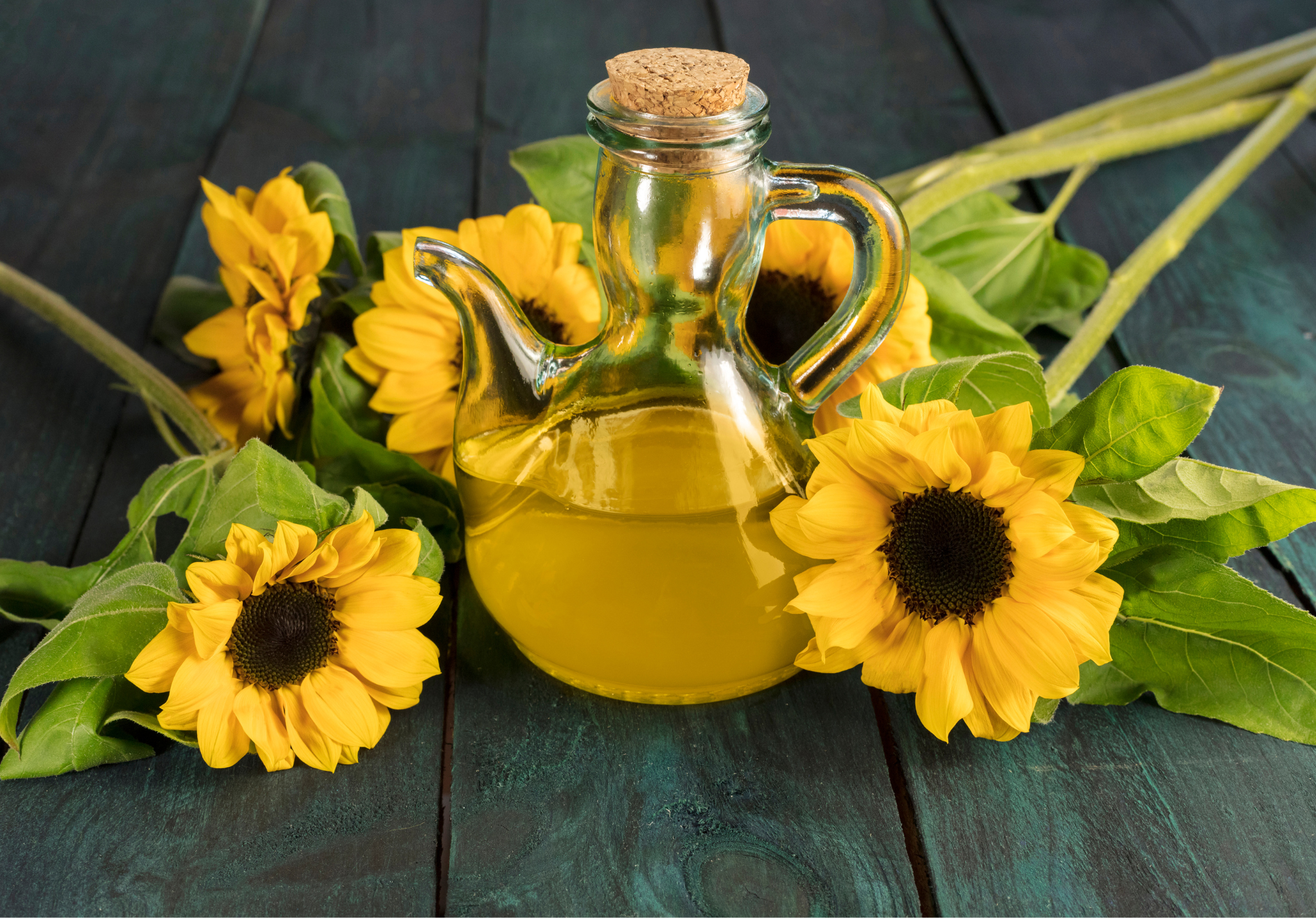
Most consumers may recognize oleic acid by its other name: omega-9. It may also be known for its ability to remain stable without hydrogenation; in other words, it maintains liquidity at room temperature. What gives high oleic sunflower oil the advantage not only over other sunflower oils, but other oils as well? Bell Chem, your food ingredient supplier, answers this question and many more with the following information.
Sunflower oils are rich in both linoleic and oleic acids. In fact, sunflower oil has 4 distinct varieties in the United States, and high oleic contains the greatest amount of oleic acid at 82% by volume. Specifically, high oleic sunflower oil is a monounsaturated fatty acid with a single double bond.
High oleic sunflower oil’s health benefits
In the ongoing discussions pertaining to animal fats versus plant fats, high oleic sunflower oil has proven a clear winner with its ability to control blood sugar levels as it lowers low density lipoprotein (LDL) levels and may subsequently raise high density lipoprotein (HDL) levels. These factors have been shown in studies spanning decades to possibly reduce the risk of heart disease. The Food and Drug Administration approved high oleic sunflower oil as a qualified health claim against heart disease.
Along with the 3 other varieties of sunflower oil, high oleic sunflower oil abounds in Vitamin E, an antioxidant known to deter cellular damage. Vitamin E also bolsters the immune system and assists in the epidermis’s elasticity.
High oleic sunflower oil acts as a source of energy for the body’s cells, plays a key role in myogenesis (whereby myoblasts differentiate into multinucleate muscle fibers), and aids in quelling inflammation.
High oleic sunflower oil in foods
The astonishing health benefits of high oleic sunflower oil are matched by its versatile uses in many corners of the food industry. From industrial frying and baked goods, as a spray to coat cereal flakes and puffs, as a coating for dried fruit and crackers, and as an ingredient in non-dairy creamers to give the overall mouthfeel of traditional cream, the food industry finds the use of high oleic sunflower oil superior to other vegetable oils.
High oleic sunflower oil as an industrial lubricant
Laboratory trials have concluded that, when compared to mineral lubricants, high oleic sunflower oil plus copolymers perform as well with beneficial byproducts that do not impact the environment nearly as negatively due to the low volatility and biodegradability of high oleic sunflower oil. The viscosity of copolymers directly affects the use of high oleic sunflower oil, giving it the range to be used in 4-stroke engines, ball bearings, gears, and more.
Biodiesel fuel from high oleic sunflower oil
Biodiesel’s formulation is not unique - soybeans, corn, canola, and many other crops are regularly transformed into biodiesel. When compared to standard petroleum-based diesel fuel, biodiesel is biodegradable, sulfur-free, and nontoxic. High oleic sunflower oil is more expensive to manufacture than canola oil, but consider this: for every acre of sunflowers planted, 600 pounds of oil can be produced. Compare that to soybeans, which produce just over 400 pounds per acre.
Bell Chem is a food ingredient supplier based in Longwood, FL (just north of Orlando) with hundreds of products stocked in their 50,000+ square-foot warehouse, including high oleic sunflower oil. Expect the highest quality products, expedited shipping options for maximum efficiency, and unrivaled personalized customer service. Let our knowledgeable and friendly customer service representatives and accounting staff personalize all your needs by either calling 407-339-BELL (2355) or by sending us an online message.